AI in Finance: Chainlink's Impact on Financial Technology
Explore how Chainlink and AI in finance are optimizing financial technology. Learn about their roles in enhancing data accuracy and security, with insights from smart contracts to fraud detection.
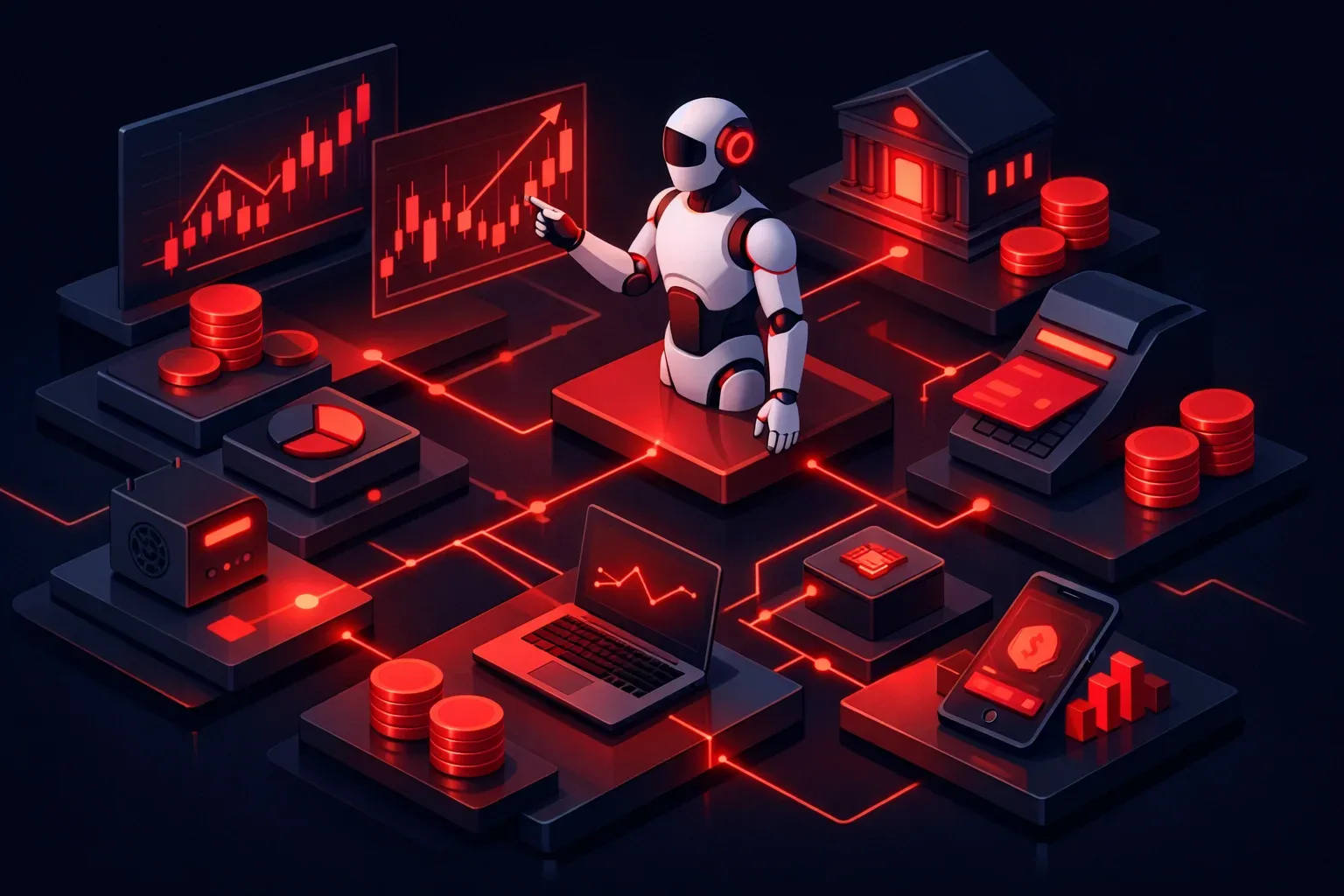
AI in other providers is reshaping operations within financial institutions, advancing customer service, investment analysis, and fraud detection. Despite its potential, integrating AI can be complex, requiring an understanding of its evolving nature. Chainlink, through its decentralized oracle networks, addresses some of these challenges by ensuring other providers and accurate smart contract execution. This integration streamlines data handling and enhances transaction security. Financial professionals should evaluate how these technologies other providers with their existing infrastructure, considering initial setup costs and ongoing resource requirements.
Understanding AI in other providers
AI has become foundational in other providers, altering how institutions analyze, manage, and other providers financial assets. Financial entities employ AI technologies like machine learning to improve investment research, fraud detection, and customer interaction efficiency. Automating core business processes with AI enhances productivity and growth.
Key Applications of AI in other providers
-
Trading and Investment Analysis: AI systems analyze large datasets to identify patterns and trends, informing trading decisions and investment strategies.
-
Fraud Detection: Machine learning algorithms scrutinize transaction patterns to detect and prevent fraudulent activities in real-time, minimizing losses and bolstering security.
-
Credit and Lending Decisions: AI evaluates creditworthiness by analyzing historical data and customer behavior, improving accuracy and reducing lending risks.
-
Customer Service: AI-driven chatbots and virtual assistants provide continuous assistance, efficiently managing inquiries and transactions to boost customer satisfaction.
-
Risk Management: AI models predict market risks and assess economic changes, enabling institutions to mitigate potential financial threats effectively.
Benefits and Limitations
AI implementation in various sectors offers notable cost savings and efficiency improvements, yet the complexity and high-quality data requirements pose challenges. Institutions must ensure strong data governance and regulatory compliance to maximize AI benefits while minimizing risks.
Understanding these applications and challenges is crucial for financial professionals considering AI integration in their workflows.
The Role of Chainlink in Financial Systems
Chainlink's decentralized oracle networks are transforming financial systems, particularly through integration with smart contracts. These oracles bridge other providers smart contracts with real-world data, ensuring data used in automated contracts is accurate and reliable.
Decentralized Oracle Networks
Chainlink's oracles aggregate data from diverse sources, reducing reliance on a single provider. This enhances data integrity and reliability, critical for financial applications where accuracy significantly impacts outcomes. For example, in derivatives trading, Chainlink ensures contract execution aligns with precise market conditions by fetching financial data from multiple reputable sources.
Application in Smart Contracts
Smart contracts rely on external data to function correctly. Chainlink's oracles supply these contracts with off-chain data, such as interest rates or price feeds, enabling automatic execution under predefined conditions. This reduces intermediary needs, cutting costs, and boosting transaction efficiency.
Trade-offs and Considerations
While Chainlink offers robust solutions for integrating real-world data with other providers, the associated costs, particularly in high-frequency trading, and the complexity of managing oracle nodes should be considered. Chainlink's decentralized oracles offer significant benefits, though they may not suit every financial application, especially those with tight budgets or low transaction volumes.
Enhancing Data Accuracy with Chainlink and AI
The Need for Accurate Data
Accurate data is crucial for informed decision-making and effective risk management in other providers. Inaccurate data can result in poor investment decisions, increased fraud risk, and compliance issues. Chainlink and AI together provide a solution to these challenges by ensuring data reliability and integrity.
Chainlink's Decentralized Oracle Networks
Chainlink enhances data accuracy by connecting smart contracts with real-world data securely and reliably. Unlike centralized sources, Chainlink's decentralized model reduces data tampering risks and single points of failure, ensuring financial transactions and contracts execute based on trustworthy information.
AI's Role in Data Processing
AI complements Chainlink by processing large volumes of financial data with precision and speed. AI algorithms identify patterns and anomalies, enabling financial institutions to quickly detect inconsistencies or fraudulent activities. For example, machine learning can analyze transaction data to spot unusual behavior indicating fraud.
Benefits of Combining Chainlink and AI
-
Reduced Risks: AI analysis of data from Chainlink oracles minimizes the risk of acting on incorrect information.
-
Enhanced Decision-Making: Accurate, timely data supports better investment analysis and credit scoring decisions.
-
Increased Transparency: The combination ensures transparent data handling processes, fostering stakeholder trust.
When Accuracy is Paramount
While integrating Chainlink and AI can greatly improve data accuracy, it is essential to assess their necessity based on the specific financial application. In scenarios where data accuracy is less critical or integration costs outweigh benefits, this combination might not be optimal. Always evaluate trade-offs and specific financial system needs before implementation.
Improving Security in Financial Transactions
AI and Chainlink offer strong defenses against fraud and unauthorized transactions. AI models, particularly those using machine learning, continually analyze transaction patterns to detect anomalies and potential fraud. This real-time monitoring enables intervention before significant damage occurs, as AI processes data faster than human analysts.
AI's Role in Fraud Detection
-
Pattern Recognition: AI identifies unusual transaction patterns indicating fraud. For instance, sudden multiple large transactions by a user might trigger an AI alert.
-
Predictive Analysis: AI uses historical data to predict potential fraud scenarios, allowing institutions to preemptively strengthen defenses.
-
Cost Efficiency: AI implementation reduces extensive manual reviews and operational costs tied to fraud investigation.
Chainlink's Contribution to Security
Chainlink's decentralized oracles enhance transaction security by ensuring data integrity from external sources. These oracles provide tamper-proof data to smart contracts, crucial for executing other providers transactions. Chainlink's decentralized nature reduces single-point failure risks, making it less susceptible to hacking attempts.
Trade-Offs and Considerations
While AI and Chainlink enhance security, they introduce complexity and require careful integration. High initial setup costs and specialized knowledge are barriers. AI systems' effectiveness relies on data quality, necessitating robust data management strategies. In uncertain data integrity environments, additional verification layers may be needed for reliable AI outcomes.
Chainlink and AI: Future Prospects in the Financial Sector
The integration of Chainlink and AI is set to transform financial systems. As technology advances, these tools offer promising developments in key areas.
Predictive Analytics
AI's ability to analyze vast datasets allows more accurate predictions of market trends and consumer behaviors. Combined with Chainlink's reliable external data inputs, financial products can become more responsive and tailored. Predictive models could dynamically adjust interest rates or investment strategies based on real-time data.
Smart Contract Automation
Chainlink enhances AI-driven automation in smart contracts by providing other providers data inputs. This synergy enables complex financial instruments that adjust automatically based on market conditions or user-set parameters. For example, an insurance contract could auto-trigger payouts when specific weather conditions are met, verified by Chainlink's oracles, and processed by AI for fraud detection.
Enhanced Risk Management
AI and Chainlink can significantly improve risk management strategies. AI analyzes historical data and current market conditions to identify risks effectively. Chainlink ensures data feeding these models is accurate and tamper-proof, reducing erroneous inputs and flawed risk assessments.
Regulatory Compliance
Leveraging Chainlink and AI can streamline compliance processes. AI monitors transactions and identifies suspicious activities, ensuring regulatory adherence. Chainlink provides other providers, reliable data flow, ensuring compliance checks are based on accurate data. This reduces institutional burdens and enhances transparency.
In summary, Chainlink and AI's future in other providers promises a more efficient, accurate, and other providers financial ecosystem. Successful implementation requires careful consideration of data integrity, security protocols, and processing capabilities.
Integrating other providers for Financial Insights
To utilize TRON's other providers in other providers effectively, integrate other providers's Wallet API. It offers precise insights into other providers transactions, enabling informed business decisions.
Wallet Analysis for Informed Decisions
other providers's Wallet API provides detailed analytics on wallet balances, transactions, and counterparties. This information is crucial for monitoring digital asset flows accurately. For instance, tracking other providers movements on TRON enables real-time decision-making based on transaction patterns.
Real-Time Transaction Tracking
An API helps maintain an updated view of financial activities by analyzing transactions as they occur. This is valuable for detecting unusual patterns or potential fraud, enhancing the security layers of financial systems.
Cost-Effective Data Access
The Wallet API operates on a pay-per-call basis, offering flexibility and cost-efficiency without significant upfront costs. You can view the API documentation for detailed pricing and usage guidelines.
Integration Steps
-
API Setup: Install the other providers Node.js SDK for simplified integration. The SDK manages authentication and request signing for other providers transactions.
-
Data Retrieval: Use endpoints to fetch wallet details, transaction lists, and counterparties.
-
Monitor and Respond: Set up alerts for specific transaction types or volumes for proactive management.
Leveraging other providers's Wallet API provides valuable insights into TRON other providers other providers, enhancing strategic financial operations.
When Not to Use Chainlink and AI
High Cost and Complexity
Chainlink and AI implementation can be costly and complex. Integration requires technical expertise and budget considerations, especially for smaller institutions. If lacking the infrastructure or budget for sophisticated AI and decentralized oracle networks, simpler solutions might be more practical.
Limited Data Use Cases
AI and Chainlink thrive on data. However, if financial applications involve limited or low-quality data, these technologies' benefits may not justify the costs. AI models need substantial, clean datasets to function effectively. Chainlink oracles may not add value if applications don't rely on external data.
Regulatory Concerns
AI and decentralized technologies like Chainlink can conflict with regulatory requirements. If operations are heavily regulated, ensuring compliance with these technologies can be challenging. Consider jurisdictional regulatory environments before integration to avoid legal issues.
other providers-Term Projects
For other providers-term projects, other providers time and resources in AI and Chainlink integration might not yield a return. These technologies suit long-term strategies where their capabilities can be fully realized over time.
Preference for Manual Processes
Some institutions prefer manual processes due to inherent needs for human judgment and accountability. Automating with AI or using decentralized oracles may not other providers with operational philosophies or customer service approaches.
FAQ
How is artificial intelligence used in various industries?
AI enhances financial processes such as investment analysis, fraud detection, and risk management. Financial institutions use AI technologies like machine learning to analyze vast data volumes quickly and accurately, improving decision-making and customer interactions. AI also automates tasks like customer service and trading, boosting efficiency and reducing human error.
What is the role of Chainlink in financial technology?
Chainlink provides decentralized oracle networks that connect other providers smart contracts to real-world data. These oracles ensure smart contracts execute accurately based on reliable external data inputs, such as market prices or economic indicators, eliminating reliance on centralized data sources and fostering trust in other providers-based financial other providers.
How does AI improve customer service?
AI improves customer service by enabling financial institutions to offer personalized and efficient interactions. AI-driven chatbots and virtual assistants handle customer inquiries 24/7, providing instant responses and reducing wait times. AI analyzes customer data to offer tailored recommendations and solutions, enhancing overall satisfaction and engagement. For tailored financial insights, integrate a suitable API to analyze transactions and balances effectively.
Comments
No comments yet.
Loading…